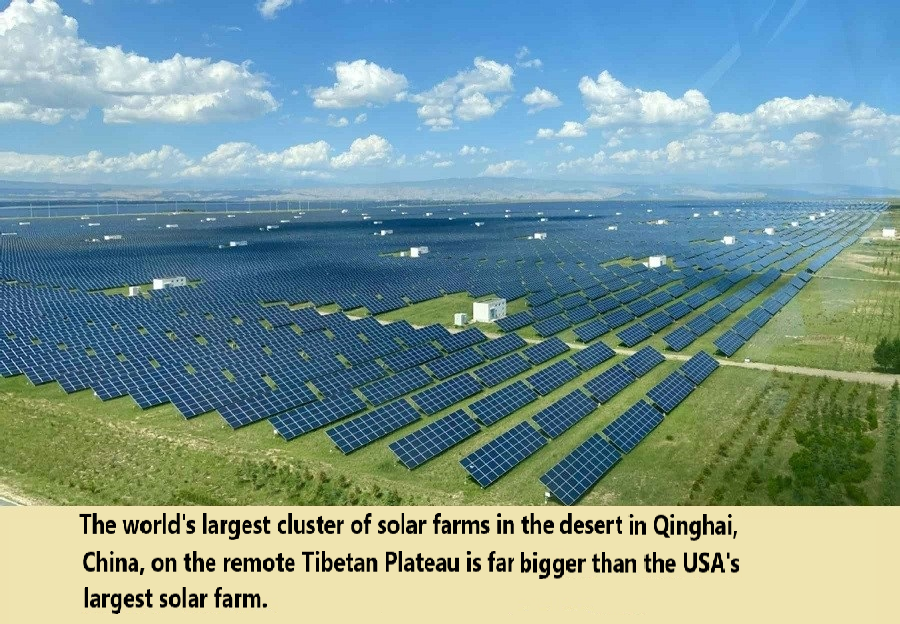
For China, green technology is more than an environmental concern; its implementation is an economic imperative fundamentally linked to the its energy security, and backed by a combination of robust state planning, massive capital investment, and dominance of the global supply chain. And the country’s green transition is not only generating power – it’s physically redrawing the map of how infrastructure, industry and the environment can coexist.
The global green infrastructure market is expanding at a compound annual growth rate of roughly 19.6 %, according to HTF Market Insights. China is spearheading this $5 trillion market and holds a near-monopoly on the production of the foundational technologies required for the green transition.
The green energy sector accounts for 11.4 per cent of China’s economy, and nearly doubled in real value between 2022 and 2025. A recent analysis by Carbon Brief found it to be on par with the entire economies of Brazil and Canada. China’s clean-energy sector, if it were a country, it would now be the world’s 8th-largest economy.
Greening the desert
Beyond statistics, China’s green infrastructure growth is expanding to create a visible impact on the geographical landscape. This is particularly so of the massive, multi-gigawatt renewable energy bases continually being brought online is the country’s vast Western desert areas spanning more than 19 provinces.
Beyond the benefits of clean energy powering the nation, China’s green infrastructure may also provide the added effect of greening the desert. A new study from the Chinese Academy of Sciences in Lanzhou found that depending on how the solar farm is designed, the climate it’s in, and the season, the structures operate as a cool refuge where plants can grow.
The study showed that the vast solar farms provide shading and a cooling distance that can extend to between 120m and 540m on average around the farm. In lush regions, solar farms tend to create a slight heat island; however, in the desert climate and uniform terrain of China’s solar project locations allow for “energy exchange corridors” that reduce radiation and provide the necessary environment for vegetation to grow.
China will build 455 gigawatts of solar capacity in its desert regions by 2030. These huge projects will not only help power the world’s second-largest economy, but based on scientific evidence will help transform some of the country’s from inhospitable desert regions into increasingly green landscapes, transforming both its economy and its geography.
Sources:
The Fifth Estate, June 9, 2026. https://thefifthestate.com.au/urbanism/infrastructure/chinas-green-infrastructure-boom-is-transforming-deserts-and-is-now-equal-to-the-worlds-eight-biggest-economies/
Econews, January 15, 2026. https://www.ecoticias.com/en/in-the-middle-of-the-tibetan-desert-chinas-largest-solar-park-is-doing-something-unexpected-that-goes-far-beyond-producing-electricity/25625/
Ecological Indicators, Volume 185, April 2026, ‘Quantifying photovoltaic power plant–induced cool island effect and vegetation response in arid regions‘. https://doi.org/10.1016/j.ecolind.2026.114765
