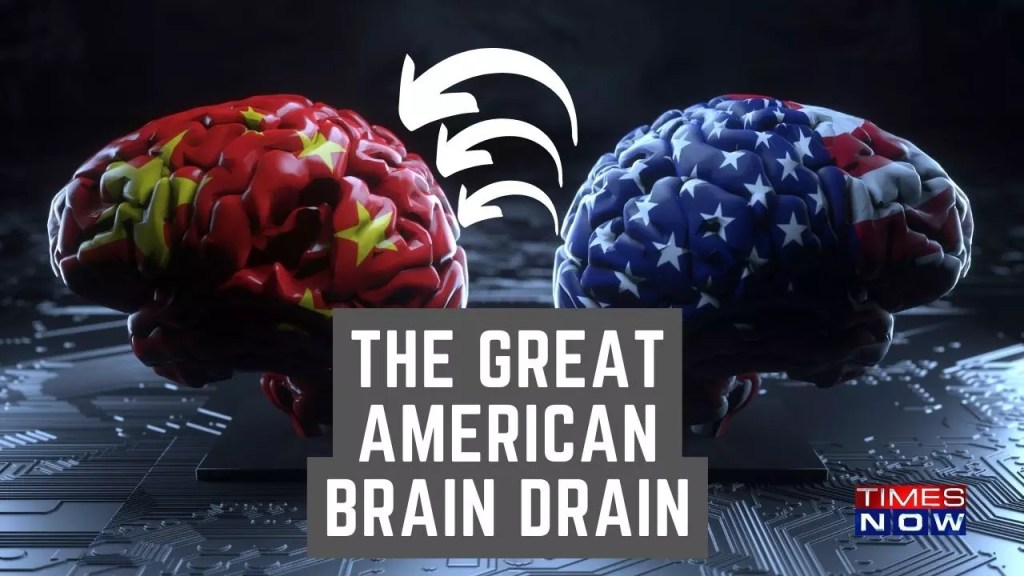
A “reverse brain drain” is seriously impacting on the United States’ long-term ability to attract and retain top-scientists—a factor that underpinned its dominance in science and technology since the post-World War II era.
JAKARTA – A nuclear physicist educated at Princeton, a mechanical engineer who once assisted NASA in researching space-based manufacturing, and a neurobiologist from the National Institutes of Health (NIH) are among those who have recently chosen to leave the United States to work in China.
They are not alone. A renowned mathematician and more than half a dozen artificial intelligence (AI) experts have made similar moves.
The list of scientists relocating from the US to China is growing.
According to the US news service CNN, at least 85 researchers—both junior and senior—have joined Chinese research institutions full-time since the beginning of last year, with more than half making the move in 2025.
CNN reported in September 2025 that this trend is expected to continue. The Trump regime has cut research funding and tightened political oversight of foreign talent, while Beijing has ramped up investment in domestic innovation.
This phenomenon is known as a reverse brain drain. It raises serious questions about the United States’ long-term ability to attract and retain top-tier scientists—a factor that has underpinned its dominance in science and technology since the post-World War II era.
The impact could be significant, especially in the strategic competition between Washington and Beijing in sectors such as AI, quantum computing, semiconductors, biotechnology, clean energy and intelligent military systems.
China has long sought to attract international scientists, including thousands of its own nationals who previously studied and worked in the US and Europe. Many of them went on to become pioneers and leaders in American science and technology.
Now, that mission has become even more critical amid the tightening of US technology restrictions. President Xi Jinping has repeatedly emphasised that innovation is the only path to China’s economic security.
By contrast, Donald Trump’s regime has pushed for sweeping cuts to federal research budgets, increased scrutiny of scientific research, raised H1-B visa fees for skilled foreign workers, and used federal funding as leverage against universities. These measures have inadvertently benefited China.
Yu Xie, a sociology professor at Princeton University, described US policy as “a gift from Trump” to Chinese universities. He believes the changes have made it easier for institutions in China to recruit high-quality talent.
Recent U.S. science defunding and restructuring efforts—combined with tighter visa controls for international students and researchers—have created major uncertainty in American academic laboratories and prompted scientists to seek opportunities abroad.
Source: IDN Indonesia, https://www.idnfinancials.com/…/list-of-american…

 China Environment News