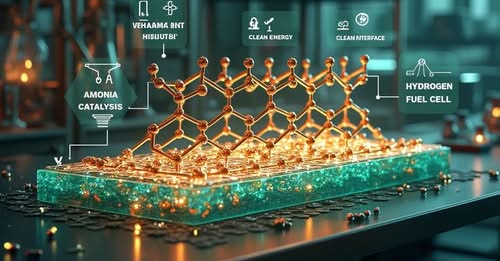
Scientists at University of Science and Technology of China (USTC), working alongside the Dalian Institute of Chemical Physics (DICP), have come up with a game-changing catalyst system that could shake things up for both ammonia production and fuel cell technology. Their approach, called tandem catalysis, uses a clever dual-interface setup that speeds up reaction times and boosts energy efficiency—all while tackling some of the biggest hurdles in clean ammonia and hydrogen fuel cells.
- Reimagining ammonia synthesis with better efficiency
For decades, the world has relied on the energy-hungry Haber-Bosch process to produce ammonia, a method that takes a heavy toll on the environment. This new system offers a refreshing twist: it could slash the energy costs typically associated with ammonia synthesis by optimizing how the reactions unfold at the molecular level. It’s a potential win for industrial decarbonization, as industries look for cleaner ways to keep up with demand while cutting emissions.
- Fuel cell innovation that matters
But this discovery doesn’t stop at ammonia. It also makes a significant impact on hydrogen fuel cell performance. Better reaction rates and improved energy efficiency could mean more reliable, scalable options for zero-emission power generation—particularly in transportation and industrial applications where clean energy alternatives are in high demand.
While the early results are exciting, researchers still need to a lot of work to refine and scale up the process.
Source: Hydrogen Fuel News, April 30, 2025.
https://www.hydrogenfuelnews.com/new-tandem…/8570668/

 China Environment News