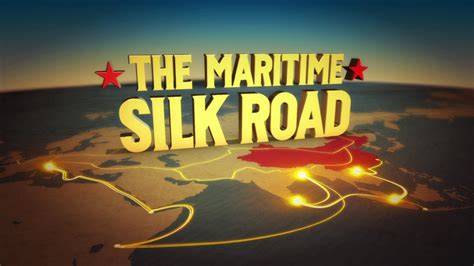
China’s Maritime Silk Road (MSR), as a key part of the Belt and Road Initiative (BRI), forms the backbone for the BRICS trading bloc. It is a comprehensive system of world-class, deep-water ports across Global South countries. With most of these ports now fully operational the Maritime Silk Road is re-routing the world’s resource flows.
China now does more trade with the Belt and Road countries than with the United States, the European Union, and Japan, combined.
Port infrastructure has been a key focus of many BRI projects. In particular, China’s engagement in port construction and management through build-operation-transfer, or acquisition, and merger along the “new” Maritime Silk Road has reconfigured global supply networks and logistics connectivity.
The Silk Road Maritime network has continued to expand and includes South America, sub-Saharan Africa, Oceania and the Pacific region. By the end of June 2023, it had reached 117 ports in 43 countries, and more than 300 well-known Chinese and international shipping companies, port enterprises and think tanks, among other bodies, have joined the Silk Road.
The second term of the Trump regime has seen the US launch an aggressive trade war on China, through astronomical tariffs and technology sanctions.
However, many analysts suggest that the fallout from the Trump regime tariffs on countries like Canada, Mexico, and those in the European Union could present an unexpected opportunity for China. As these countries face their own challenges in navigating Trump’s trade policies, they may look to strengthen trade relations with China. This could lead to a closer alignment between China and some of its smaller trade partners, as the restructuring of global trade may make it more advantageous for these nations to partner with China in certain areas, such as technology, manufacturing, and raw materials.
BRI gives China a strategic position on the geopolitical stage, especially in the three-continent region that establishes cooperation. BRI is also a bridge for China to meet the energy resources needed by its country without having to depend on countries or areas of instability. In addition, the BRI opens opportunities for China to attract potential allies whose own interests do not align with those of the US in the region, such as Japan and India. The presence of BRI is also welcomed by various ASEAN countries, such as Vietnam, Thailand, and Indonesia.
Over recent years, led by China and BRI infrastructure, the BRICS countries in particular have strengthened the capacity for a multipolar bypass of US trade aggression.
Sources:
- China Briefing, April 9, 2025. https://www.china-briefing.com/…/trump-raises-tariffs…/
- China Daily, Oct 17, 2023. https://global.chinadaily.com.cn/…/WS6525de2ba31090682a…
- Modern Diplomacy, May 2, 2025. https://moderndiplomacy.eu/…/how-bri-and-its-influence…/

 China Environment News